Best Web3 Infrastructure Providers 2026
This guide explains what Web3 infrastructure is and compares leading Web3 and internet infrastructure providers for 2026.
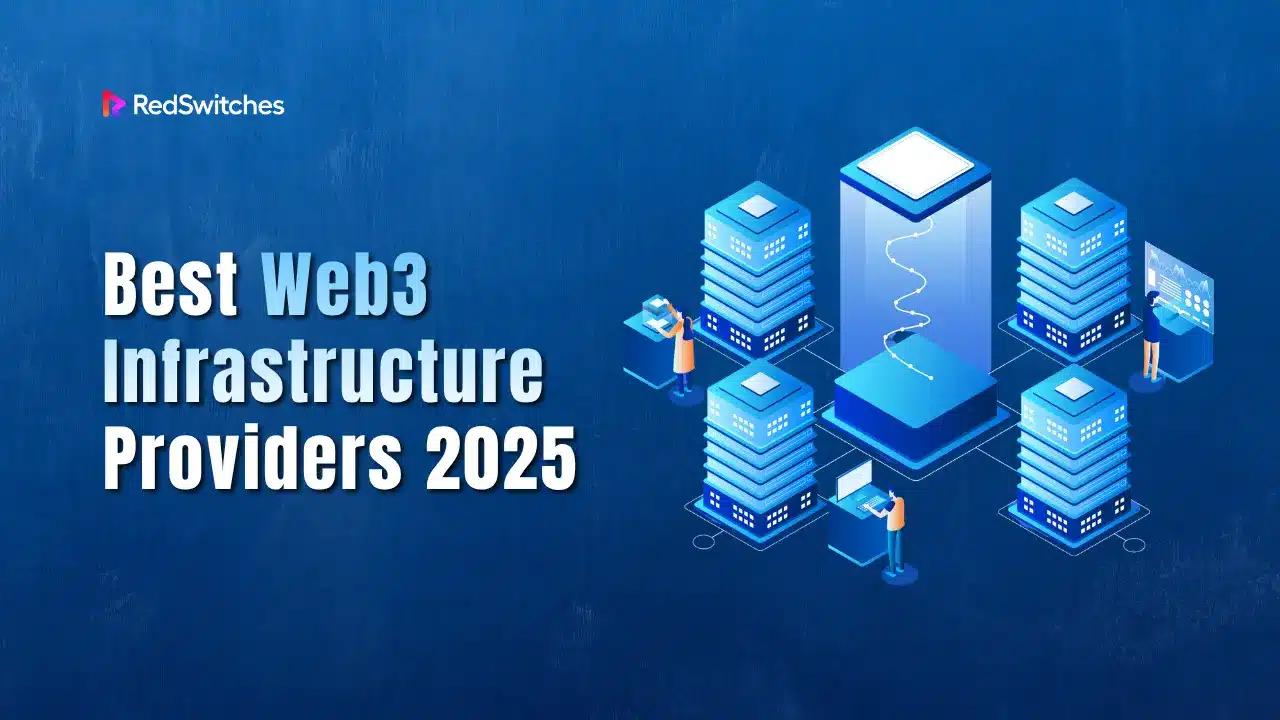
Web3 infrastructure is the backbone of decentralized applications. It’s the stack that lets dApps read chains, write transactions, and ship fast, reliable user experiences.
At its core are node providers and RPC APIs that expose blockchain data and execution safely at scale. Indexing tools, such as subgraphs, turn raw on-chain events into queryable datasets.
Storage layers like IPFS/Filecoin handle content and metadata. And the whole system runs on servers, bare metal, GPU, and CDN nodes, that deliver low latency and uptime.
Choose well, and you gain performance, 99.99%-grade reliability, clear scaling paths, and predictable costs. Choose poorly, and you inherit rate limits, lag, and outages.
Key Takeaways
- RedSwitches leads with bare metal servers offering 10-minute deployment and full control
- 99.99% uptime SLA is critical, which means only 52 minutes of downtime per year
- Hybrid infrastructure combining managed RPC + dedicated hardware performs best
- Region-matched low-double-digit ms P95 latency is ideal for trading and gaming applications
- SOC 2 compliance is often required for enterprises and regulated industries
- Decentralized RPC networks provide censorship resistance but variable performance
- API-first platforms like Alchemy are best for startup MVPs and rapid development
- Multi-chain support (often 50–75+ blockchains) is now a common expectation.
- CDN servers are crucial for global NFT metadata and dApp asset delivery
Top Web3 Infrastructure Providers in 2026
Let’s discuss the top Web3 infrastructure providers in 2026.
| Provider | Overview | Strengths | Best Use Case |
|---|---|---|---|
| RedSwitches (Top Pick) | Bare metal & GPU servers, 10-min deploys, unmetered 1–25 Gbps, 20+ regions | Full control, root access, DDoS protection, predictable performance | Validators, indexers, sequencers, dApps needing power + control |
| Alchemy | Developer-first APIs, NFT indexing, dashboards, analytics | Rich dev tools, fast setup, strong analytics | Startups and devs building with advanced APIs |
| Infura | ConsenSys RPC, Ethereum + IPFS/Filecoin, MetaMask native | Proven reliability, seamless ETH integration | Ethereum-first projects and NFT storage |
| QuickNode | RPC for 75+ blockchains, global edge routing, region-matched low-double-digit ms P95 latency | Speed, coverage, real-time streams & webhooks | DeFi, trading, and gaming apps need low latency |
| Chainstack | Hybrid cloud, SOC 2 certified, Subgraphs + IPFS | Compliance-ready, hybrid/on-prem options | Enterprises and regulated industries need secure nodes |
Here are the top Web3 native market leaders.
Own Your Web3 Performance
Ditch noisy neighbors. Get isolated hardware, predictable throughput, and managed dedicated RPC setups for critical workloads.
RedSwitches
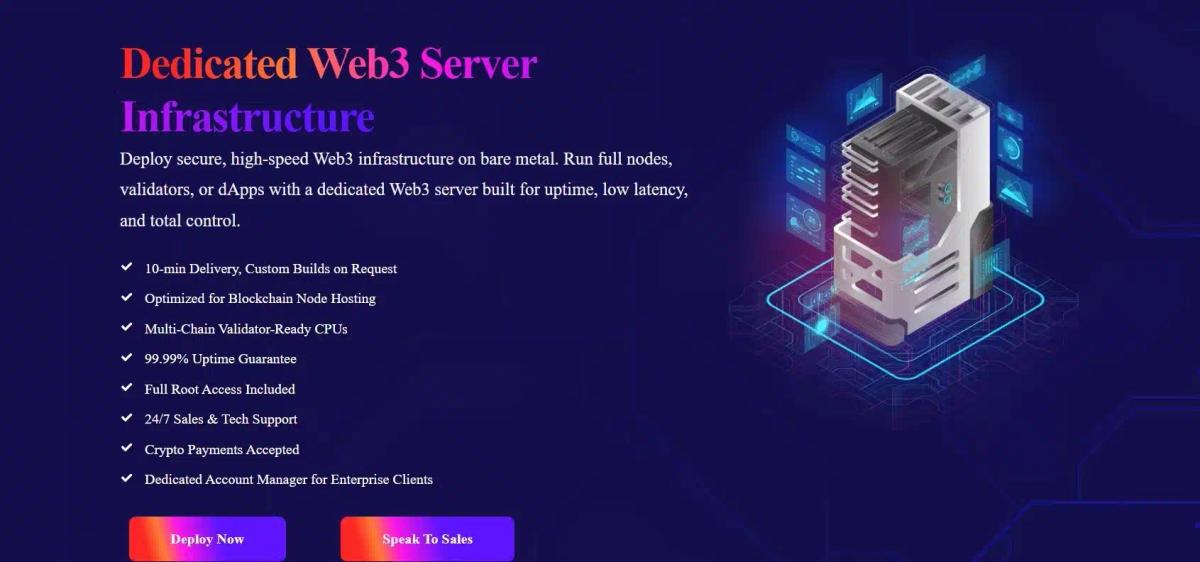
RedSwitches delivers bare metal and GPU servers purpose-built for Web3, AI, CDN, and high-availability workloads. With 10-minute deployments, unmetered 1–25 Gbps bandwidth, and 20+ global regions, it gives teams the raw performance and reach that managed RPC providers can’t.
- Key Strengths: Full root access, dedicated hardware, and enterprise security with free DDoS protection. Developers gain predictable performance without noisy neighbors. Global data centers keep latency low, while flexible payments, including crypto, make scaling simple.
- Limitations: RedSwitches requires teams to manage node software and updates. That extra control is the reason advanced builders choose it.
- Best Use Case: Ideal for validators, indexers, and dApps that demand power, control, and scale. The best foundation for Web3 teams building serious infrastructure. Explore RedSwitches Bare Metal Servers, GPU Servers, and CDN Solutions.
Alchemy
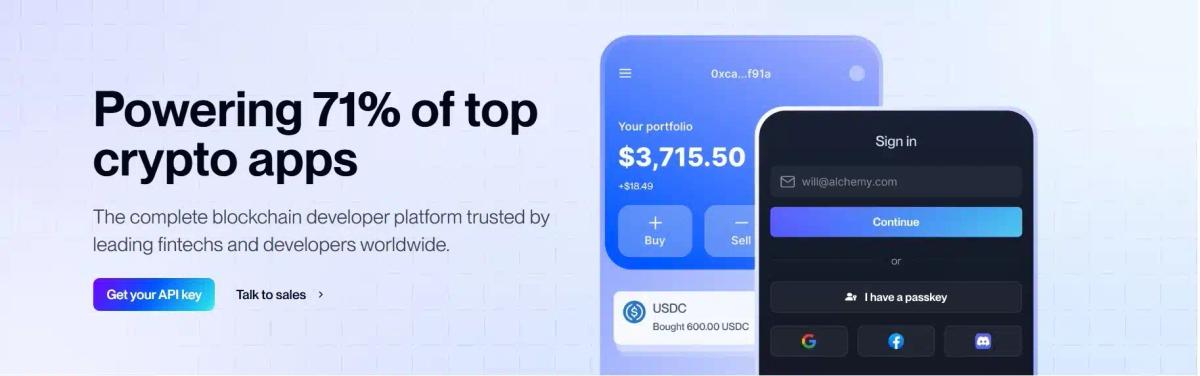
Alchemy is a developer-first platform with RPC access, enhanced APIs, NFT indexing, and detailed dashboards. It now exposes RPC endpoints across 80+ networks spanning roughly 64 blockchains.
- Key Strengths: Robust APIs, real-time analytics, and strong documentation. Excellent for teams that want to ship fast without worrying about node ops.
- Limitations: Managed model limits customization. Usage at scale can become expensive.
- Best Use Case: Perfect for startups and developers who need polished APIs and quick go-to-market execution.
Infura
Backed by ConsenSys, Infura provides reliable RPC endpoints for Ethereum, Polygon, Arbitrum, Optimism, plus IPFS/Filecoin. It’s natively integrated with MetaMask.
- Key Strengths: Trusted infrastructure for Ethereum dApps. High uptime, strong scaling, and seamless integration with the wider ConsenSys ecosystem.
- Limitations: Ethereum-first focus. Less flexibility than self-hosted or hybrid setups. IPFS/Filecoin access is limited to pre-qualified customers.
- Best Use Case: Best for Ethereum-centric projects needing fast, stable access plus IPFS/Filecoin for NFT data and storage.
QuickNode
QuickNode RPC for over 75 blockchains across 130+ networks, global edge routing, region-matched low-double-digit ms P95 latency
- Key Strengths: Speed, coverage, and real-time tools like Streams and Webhooks. Strong developer UX and rapid multi-chain support.
- Limitations: Fully managed stack reduces configuration options. High-volume workloads can drive up costs.
- Best Use Case: Designed for DeFi, trading, and gaming dApps where low latency is critical to user success.
Chainstack

Chainstack provides hybrid cloud and enterprise-grade Web3 infrastructure. It supports dedicated or shared nodes, Subgraphs, and IPFS gateways.
- Key Strengths: SOC 2 certification (Type II as of August 2025), transparent pricing, and hybrid deployment options across cloud or on-prem. Tailored for compliance-heavy environments.
- Limitations: More complex than “one-click” RPC services. Beginners may underuse its advanced features.
- Best Use Case: Suited for regulated industries and enterprises that need secure, compliant, and customizable node infrastructure.
Decentralized & Multi-Chain Specialists
| Provider | Overview | Strengths | Best Use Case |
|---|---|---|---|
| Ankr | Decentralized RPC network + staking; supports 80+ blockchains including new L2s like Etherlink (Tezos) | Redundancy, multichain RPC, staking tools, L2 support | Teams prioritizing decentralization and multichain resilience |
| Moralis | APIs, NFT/token indexing, and serverless backends; Solana NFT APIs | One-call APIs, fast prototyping, broad cross-chain support, SOC 2 Type II security | NFT apps, games, or prototype dApps needing quick launch |
| NOWNodes | API access to 110+ blockchains, full + archive nodes | Wide chain coverage, ~99.95% uptime, ~0.6s latency, scalable infra | Multi-chain projects, wallets, portfolio trackers, aggregators |
| GetBlock | Blockchain-as-a-Service with compute-unit (CU) billing | Predictable pricing, free tier for testing, scalable plans | Small teams needing cost-efficient, multi-chain coverage |
Let’s explore the decentralized and multi-chain specialists.
Ankr
Ankr runs a decentralized RPC network and offers liquid and delegated staking for Web3 developers. It now covers 80+ blockchains, including the new EVM rollups like Etherlink (Tezos L2) launch.
- Key Strengths: Decentralized redundancy, multichain RPC, staking tools, and new L2 support mean developers get both reliability and innovation.
- Limitations: Performance can vary since the infrastructure is distributed. Token staking adds complexity for teams.
- Best Use Case: Teams focused on decentralization and new L2 support, like those building open, resilient multichain dApps.
Moralis
Moralis delivers APIs, NFT/token indexing, and serverless backends wrapped in a single platform. It supports all major chains and offers Solana NFT APIs that deliver metadata, media, and ownership data in one call.
- Key Strengths: One-call APIs, rapid prototyping, solid cross-chain coverage, and SOC 2 Type II security.
- Limitations: High-level abstractions can limit customization and introduce vendor lock-in.
- Best Use Case: Ideal for NFT apps, games, or prototype dApps that want to build fast without backend development overhead.
NOWNodes
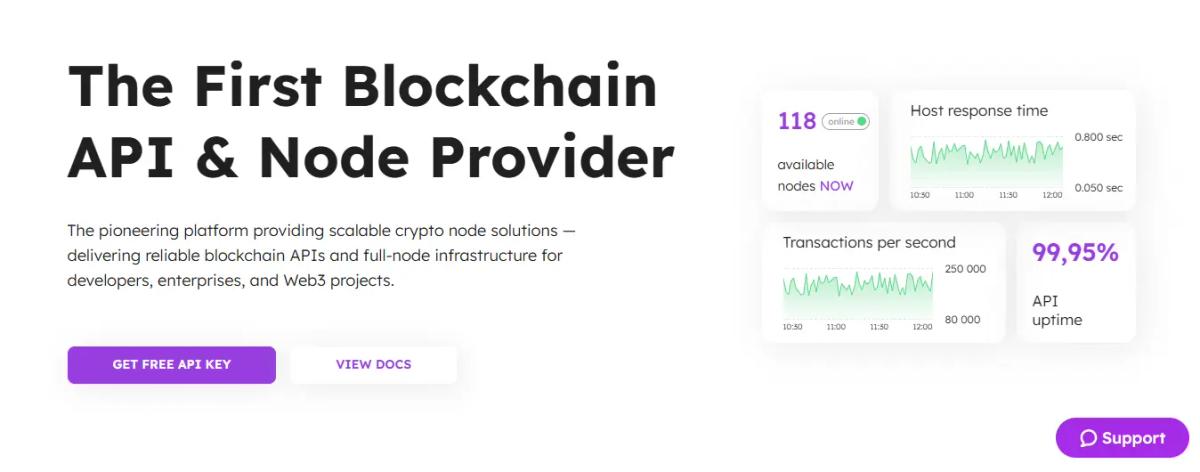
NOWNodes provides API access to 110+ blockchains, including full and archive nodes, with easy integration and high uptime
- Key Strengths: Massive chain support, ~99.95% uptime, ~0.6s latency, scalable infrastructure for any volume.
- Limitations: Breadth comes at a cost, performance may not match specialized providers, and API tools are basic.
- Best Use Case: Budget-conscious, multi-chain projects, wallets, portfolio trackers, and aggregators needing depth without managing nodes.
GetBlock
GetBlock offers Blockchain-as-a-Service with a compute-unit (CU) pricing model rather than per-request billing.
- Key Strengths: Predictable costs tied to resource use, free tier for experimenting, and tiered plans (Starter, Advanced, Pro) that scale with usage.
- Limitations: CU model may confuse newcomers; advanced scaling costs still need monitoring.
- Best Use Case: Small teams needing predictable pricing and multi-chain coverage without managing infrastructure.
Institutional & Enterprise Providers
| Provider | Overview | Strengths | Best Use Case |
|---|---|---|---|
| Blockdaemon | Institutional staking & node infra with SOC 2 Type II & ISO 27001 | Bank-grade security, 50+ networks, enterprise SLAs | Banks, funds, and regulated platforms needing certified uptime & compliance |
Here are the institutional and enterprise Web3 providers.
Blockdaemon
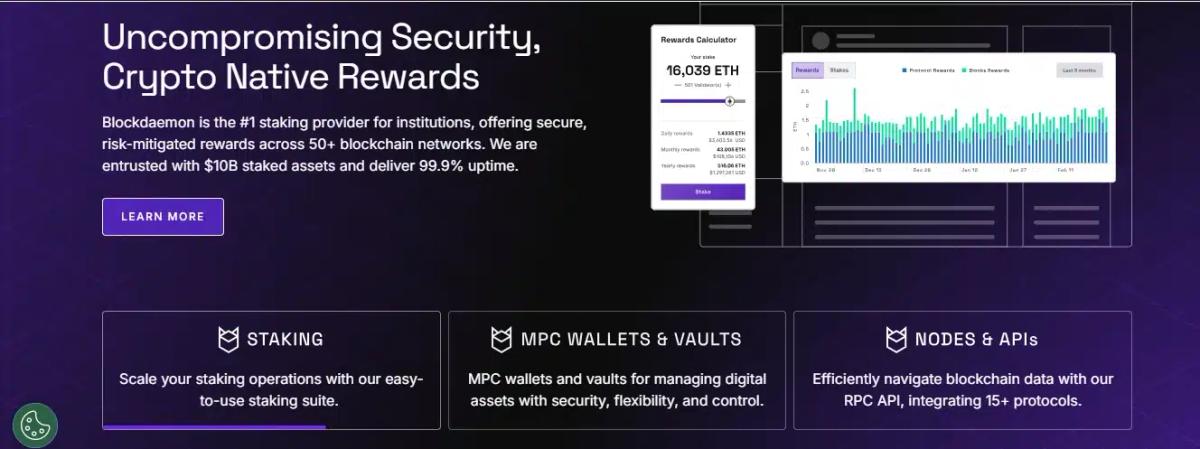
Blockdaemon Institutional staking and node infrastructure with SOC 2 Type II and ISO 27001 compliance. Global SLAs, monitoring, and enterprise support.
- Key strengths: Regulated-grade security, audited controls, and proven staking across 50+ networks. Fits bank-level due diligence.
- Limitations: Premium pricing and less hands-on node customization than self-hosted.
- Best use case: Banks, funds, and regulated platforms that need certified staking, uptime guarantees, and audit-ready controls.
Hardware & Cloud Infrastructure
| Provider | Overview | Strengths | Best Use Case |
|---|---|---|---|
| Amazon Web Services (AWS) | Amazon Managed Blockchain (AMB) with Access (serverless public RPC) and Query (data APIs); supports Ethereum, Bitcoin, and Polygon | Enterprise security, global footprint, serverless blockchain data access | Enterprises on AWS needing managed Ethereum/Bitcoin/Polygon access and easy pipelines |
| Google Cloud (GCP) | Blockchain Node Engine (BNE) for managed Ethereum nodes (full + archive); Polygon in preview | Strong data stack, global network, BigQuery + AI/ML integration | Enterprises using Google Cloud needing managed Ethereum nodes and advanced analytics |
| Microsoft Azure | Blockchain support via partners (e.g., ConsenSys Quorum) + Azure security/identity services | Enterprise integration (AD/Entra, DevOps), mature partner ecosystem | Microsoft-centric organizations preferring partner-led blockchain solutions |
Let’s discuss the web3 providers based on hardware and cloud infrastructure.
Amazon Web Services (AWS)
Amazon Managed Blockchain (AMB) offers Access (managed public nodes) and
Query (uniform blockchain data APIs). Ethereum, Bitcoin, and Polygon supported. Deep integration with AWS services.
- Key strengths: Enterprise security, global cloud footprint, and serverless data access via AMB Query.
- Limitations: Cloud complexity and egress costs; Polygon zkEVM not included; private Polygon networks unsupported.
- Best use case: Enterprises already on AWS that want managed Ethereum/Bitcoin/Polygon access and easy data pipelines.
Google Cloud (GCP)
Google Cloud (GCP) Blockchain Node Engine (BNE) provides managed Ethereum nodes (full and archive). Polygon was added in a limited preview, with continued updates. Tight BigQuery and AI/ML ties.
- Key strengths: Strong data stack, global network, and predictable BNE pricing for Ethereum.
- Limitations: Broader chain support lags specialized RPC providers; preview features may be gated.
- Best use case: Enterprises using Google’s infrastructure and AI stack that need managed Ethereum nodes plus analytics at scale.
Microsoft Azure
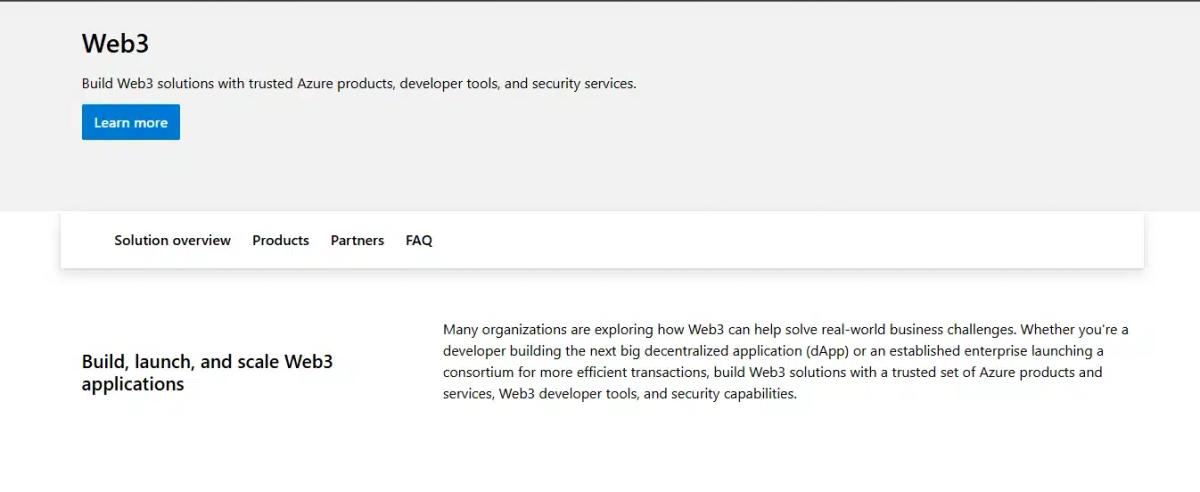
Microsoft retired its first-party Azure Blockchain Service in 2021. Blockchain support now comes via partners (e.g., ConsenSys Quorum) and adjacent Azure security/identity services.
- Key strengths: Enterprise integration (AD/Entra, DevOps) and a mature partner ecosystem.
- Limitations: No native public-chain node service; partner dependency for managed blockchain.
- Best use case: Microsoft-centric organizations that prefer partner-led solutions within Azure governance.
Key Factors When Choosing a Web3 Infrastructure Provider
Here are the key factors when choosing a web3 infrastructure provider.
- **Reliability & SLAs.**Insist on documented SLAs and credits for breaches. 99.9% ≈ 8.8 hours downtime/year; 99.99% ≈ 52 minutes. Ask for multi-region failover and status history.
- **Performance (throughput, latency, routing).**Measure P95 latency, RPS, and WebSocket stability. Look for global anycast/edge routing, regional endpoints, and vertical scale for archive queries.
- **Blockchain & L2 coverage.**Confirm mainnets, L2s, rollups, testnets, and archive access. Check roadmap cadence and how fast new chains go live.
- **Developer experience.**You want clean SDKs, WebSockets, alerts, logs, and per-method analytics. Dashboards should expose rate limits, errors, and latency by region.
- Pricing model. Understand compute units vs requests vs credits vs dedicated node pricing. Verify burst policy, archive surcharges, egress fees, and overage handling.
- **Security & compliance.**Ask for SOC 2 / ISO 27001 reports, DDoS/WAF, secret management, private networking, and MPC/HSM options. Confirm data residency and access controls.
Comparison Checklist
| Factor | What “Good” Looks Like | Quick Test | Watch-outs |
|---|---|---|---|
| Reliability & SLA | 99.99% SLA, multi-region failover, public status page | Review last 12 months incidents; verify SLA credits | SLAs without credits; single-region ops |
| Latency & Throughput | P95 < 100 ms (region-matched), stable WS streams, high RPS ceiling | Load test 10k req/min; measure P95/P99 by region | Hidden throttles; noisy neighbors |
| Global Routing | Anycast + regional endpoints, CDN for static assets | Trace route from 3 continents | One POP per continent; no routing transparency |
| Chain & L2 Coverage | Current L1s + major L2s + archive + testnets | Hit archive call (e.g., eth_getBalance at old block) | “Coming soon” chains; paid gates for basics |
| DX & Tooling | SDKs, logs, alerts, webhook/streams, per-method metrics | Trigger alert on 1% error spike | Opaque dashboards; no per-method data |
| Pricing Clarity | Line-item CU/requests, burst policy, egress included | Simulate 3 workloads; compare invoices | Archive/WS surcharges; punitive overages |
| Security & Compliance | SOC 2/ISO reports, DDoS/WAF, private peering, key custody options | Request reports + pen-test summary | Marketing-only claims; no evidence |
| Support & Onboarding | 24/7 support, <15-min critical response, migration help | File a ticket; time the response | Email-only, weekday-only support |
Use Cases: Picking the Right Provider for Your Project
Let’s discuss the use cases of web3 providers.
Startups and MVP Builders → Alchemy, Moralis
When speed matters more than control, go with API-first platforms. Alchemy and Moralis give you plug-and-play APIs, NFT indexing, and dashboards so you can launch without worrying about node ops. They’re perfect for hackathons, MVPs, and early-stage apps. Just remember, convenience comes with vendor lock-in and rising costs at scale.
Enterprises and Regulated Industries → Chainstack, Blockdaemon
Banks, funds, and enterprise platforms need compliance as much as uptime. Chainstack and Blockdaemon offer SOC 2/ISO certifications, hybrid deployments, and SLAs that pass audits. They fit environments where regulators and security teams demand documentation. The trade-off: higher costs and more setup overhead, but that’s the price of trust.
Trading & Gaming Apps → QuickNode
In trading and gaming, milliseconds decide winners. QuickNode’s edge routing and WebSocket streams deliver region-matched low-double-digit ms P95 latency. That’s why DeFi projects and multiplayer Web3 games lean on it. Watch usage, though, high volumes can burn through credits fast.
Decentralization-First Projects → Ankr, Pocket, Lava
If your priority is resilience and censorship resistance, decentralized RPC is the answer. Ankr, Pocket, and Lava distribute requests across networks of nodes, cutting single points of failure. Performance can fluctuate, but if decentralization is core to your brand, this is the stack to bet on.
Full Infrastructure Control → RedSwitches
For teams who refuse limits, bare metal is the play. RedSwitches give you dedicated hardware, GPU options, and full root access. You run validators, archive nodes, and indexers on your own terms, with predictable performance and zero noisy neighbors. The trade-off is responsibility: patching, monitoring, and scaling fall on your team. For serious builders, that control is worth it
Use managed RPCs for speed, compliance, or decentralization. But anchor your critical infrastructure on bare metal and GPU servers, which is the foundation that ensures uptime, performance, and scale on your terms.
Beyond RPC: Why You Still Need Bare Metal & CDN Servers
RPC providers are powerful, but they’re not the full stack. Running a serious Web3 application means going beyond APIs. Without the right foundation, you risk bottlenecks, downtime, and limited scalability.
Bare Metal Servers for Heavy Workloads
Managed RPC endpoints can’t match dedicated hardware when you need raw compute. Validators, indexers, sequencers, and archive nodes all perform better on bare metal. You get consistent throughput, full root access, and zero noisy neighbors. It’s the only way to guarantee predictable latency and control.
CDN Servers for Global Delivery
Web3 isn’t just on-chain, it’s user-facing. NFT metadata, wallets, and dApps need assets delivered fast worldwide. A Content Delivery Network (CDN) reduces load times and balances traffic across regions. That means better UX and stronger retention, especially for the best Web3 projects.
GPU Servers for AI + Web3 Hybrids
AI and Web3 are colliding. From fraud detection to NFT image processing to zero-knowledge proof generation, workloads demand GPU acceleration. GPU servers bridge that gap, giving dApps real-time intelligence without lag.
RedSwitches: The Backbone That Complements RPC
Use our fully managed dedicated RPC and validator nodes for convenience, but anchor critical workloads on bare metal, GPU, and CDN servers.
You get 10-minute deployment, unmetered1–25 Gbps bandwidth, and 20+ global regions. It’s the layer that ensures your Web3 stack performs at scale, stays resilient, and keeps costs predictable.
Building Resilient Web3 Infrastructure
The best Web3 infrastructure depends on your needs. Startups may choose API-first platforms. Enterprises often demand compliance and SLAs. Decentralization-first teams lean on distributed RPC networks.
Each path works, but none is complete on its own. A strong stack always combines managed RPC with reliable hardware. Bare metal servers handle heavy workloads. CDN servers speed up global delivery. GPU servers unlock AI-driven dApps.
RedSwitches brings these together with fast deployment, unmetered bandwidth, and 20+ global regions. Build your Web3 project on a foundation that is proven, scalable, and under your control.
FAQs
Q. What’s the best blockchain service for Web3?
It depends on your goals. For speed, Alchemy and QuickNode are strong. For compliance, Chainstack or Blockdaemon fit. For full control, RedSwitches’ bare metal servers lead.
Q. What is the best Web3 platform to build on?
If you want APIs and quick launch, Alchemy or Moralis work well. If you need custom nodes or heavy compute, RedSwitches is the platform to trust.
Q. What security certifications or compliance features does RedSwitches provide?
RedSwitches offers enterprise-grade DDoS protection, hardened ISO 27001- and SOC-certified data centers in key regions, and strict access controls to secure workloads.
Q. Which Web3 infrastructure components most affect dApp performance?
Latency, bandwidth, and compute power matter most. Bare metal boosts throughput. RPC endpoints manage chain data. CDNs speed global delivery. GPUs handle AI and proof-heavy tasks.
Q. How do RPC endpoint providers like RedSwitches differ from Infura?
Infura gives managed Ethereum-first RPC. It’s simple but centralized. RedSwitches provides bare metal and GPU servers, so you run your own endpoints with full control and scale.
Q. How will Layer-2 adoption change infrastructure needs for 2026?
L2s will raise demand for sequencers, provers, and indexers. Teams will need low-latency hardware and GPUs to process rollups and proofs. Bare metal will become even more critical.
Hafsa Qadeer
Technical Writer
Hafsa Qadeer is a Technical Content Writer at RedSwitches and a journalist with a background in molecular biology and oncology. She brings research precision to technical writing and SEO strategy, turning complex topics in infrastructure, biotech, and AI into content that informs and engages.
BeamMP Dedicated Server Setup Guide (2026)
Build and host a reliable BeamMP dedicated server on Windows or Linux with setup, configuration, optimization, security, and troubleshooting guidance.
ASKA Dedicated Server Setup Guide: 2026
Learn how to successfully install, configure, secure, and troubleshoot an ASKA dedicated server for smooth, persistent multiplayer hosting in 2026.
Wreckfest 2 Dedicated Server Setup Guide 2026
Build a reliable Wreckfest 2 dedicated server with clear, practical steps for 2026 covering installation, configuration, ports, optimization, and troubleshooting.
Power Your Next Project With Bare Metal
10 min delivery, zero setup fees, and 24/7/365 human engineers across 20+ global locations.