Top 9 CDN Providers in 2026: Speed, Cost & Use Cases
This guide will help you choose the best CDN provider based on real-world speed, pricing, and use case fit.
A Content Delivery Network (CDN) is a group of servers placed around the world. It stores and delivers your website content from the server closest to each user. That means faster load times, fewer delays, and less strain on your main server.
In 2026, CDNs do more than caching. They block DDoS attacks, secure APIs, and run edge logic for real-time apps. Providers like Cloudflare CDN, Amazon CloudFront, Fastly CDN, and Google Cloud CDN are pushing the edge forward, with built-in security, developer tools, and WordPress integrations.
Modern use cases include AI inference, 4K video delivery, global eCommerce, and dynamic web apps. Without a CDN, performance drops, costs rise, and users bounce.
This guide ranks the top 9 CDN providers in 2026. We’ve reviewed performance data, pricing models, and use cases to build a clear, no-fluff CDN providers list, including the best picks for WordPress and top free CDN providers for startups or small sites.
Key Takeaways
- CDNs speed up websites by delivering content from servers closest to users.
- Modern CDNs also block DDoS attacks, secure APIs, and run edge logic.
- Cloudflare offers a strong free plan with global reach and security.
- Amazon CloudFront integrates seamlessly with AWS but is complex to set up.
- Akamai provides the largest network and enterprise-grade protection.
- Fastly is best for developers needing real-time control and instant cache purging.
- Google Cloud CDN suits GCP users with low latency and hybrid setups.
- Azure CDN is ideal for Microsoft-based enterprises and .NET apps.
- Bunny.net delivers budget-friendly performance for startups and WordPress sites.
- CDN77 specializes in video streaming and live event delivery.
- KeyCDN is a simple, low-cost option for blogs and small sites.
- Free CDN tiers help startups and small sites get started quickly.
- WordPress users benefit most from Cloudflare, Bunny.net, or KeyCDN.
- Enterprises with complex needs should consider Akamai, Fastly, or CloudFront.
- The best CDN choice depends on performance, security, budget, and platform fit.
Top 9 CDN Providers in 2026 (Performance, Use Case & Value)
| CDN | Strengths | Best For | Pricing |
|---|---|---|---|
| Cloudflare | Free tier, 300+ PoPs, strong security | WordPress, SaaS | Free → $200+/mo |
| CloudFront | AWS-native, scalable, edge compute | Enterprise, media | Pay-per-GB |
| Akamai | Largest PoP network, top-tier DDoS/WAF | Fortune 500, OTT | Custom |
| Fastly | Real-time purge, dev tools, fast edge | APIs, dev teams | Usage-based |
| Google CDN | GCP-native, low latency, HTTP/3 | Static/video, GCP users | $0.08–$0.20/GB |
| Azure CDN | Microsoft stack, enterprise-grade SLAs | .NET apps, B2B portals | ~$0.085/GB+ |
| Bunny.net | Budget-friendly, easy WP setup | WP sites, startups | $0.01/GB |
| CDN77 | Optimized for video streaming | Media, events | $0.035–$0.05/GB |
| KeyCDN | Simple, real-time stats, WP plugin | Blogs, devs | $0.04/GB |
Let’s discuss the top 9 CDN providers of 2026.
Cloudflare CDN
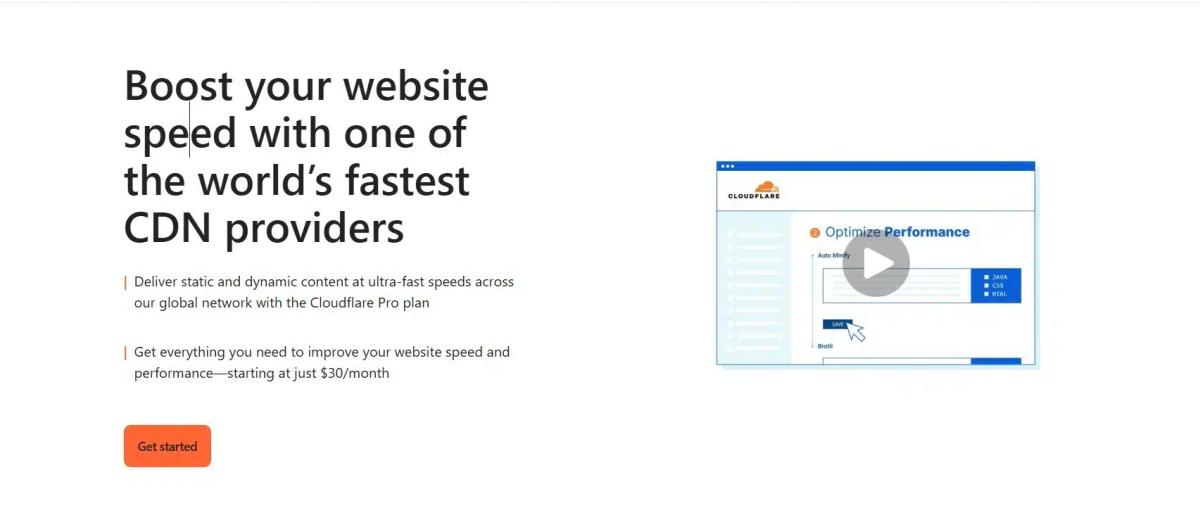
Core strengths:
- Serves in 330+ cities across 100+ countries with aggressive expansion into emerging regions.
- Fastest in ~48% of the top 1000 eyeball networks via 95th percentile TCP testing (Nov 2024–Mar 2025).
- Built-in WAF, bot protection, edge workers, image optimization, and unified DNS/security stack.
Ideal for:
WordPress sites (via the Cloudflare CDN WordPress plugin), SaaS, eCommerce, and enterprises need a strong free-tier option.
Pricing:
Free plan, Pro ($25/mo), Business ($250/mo), Enterprise with custom pricing and SLAs.
Limitations:
Support is limited on free and Pro tiers; advanced features are locked behind higher tiers.
Amazon CloudFront CDN

Core strengths:
- Seamless AWS integration (S3, EC2, Lambda@Edge, Shield, WAF).
- Powerful cache control and origin failover.
Ideal for:
AWS-hosted APIs, apps, and video, especially where deeper infrastructure integration matters.
Pricing:
Pay-as-you-go by region (~$0.085/GB US). 1 TB data transfer + 10 M requests each month
Limitations:
Complex setup and pricing. No ongoing free plan beyond trial.
Akamai Technologies CDN

Core strengths:
- Over 4,000 locationsacross 130+ countries and over 1 Pbps capacity.
- Pro-level security, enterprise SLAs, and global resilience.
Ideal for:
Massive enterprises, streaming platforms, and high-risk industries like finance and gaming.
Pricing:
Enterprise contracts only, custom pricing.
Limitations:
Costly and complex. Not suitable for small or mid-sized users.
Fastly CDN
Core strengths:
- Real‑time edge logic with Compute@Edge, instant purging, and log streaming.
- Tunable caching via VCL and full TLS control.
Ideal for:
DevOps teams, API-driven SaaS, news delivery, and personalization-heavy applications.
Pricing:
Usage-based (~$0.12/GB for North America), with a free trial available. The minimum package is $50 monthly.
Limitations:
Requires technical expertise. Network is less extensive (~100+ PoPs) than Cloudflare or Akamai.
Google Cloud CDN
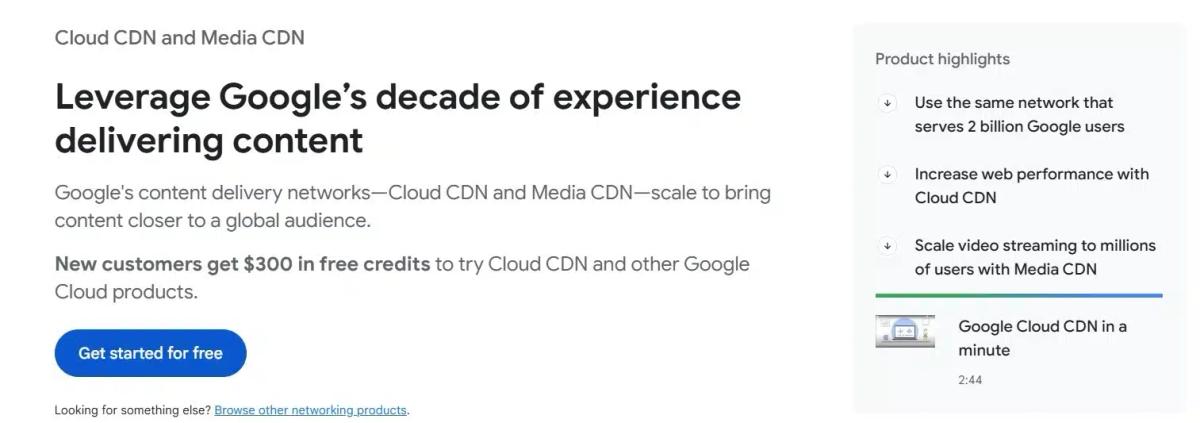
Core strengths:
- Built atop Google’s high-speed backbone with HTTP/2 and HTTP/3 support.
- Integrates with Cloud Armor and Load Balancing.
Ideal for:
GCP-hosted applications, hybrid setups, and media-heavy workloads served from Google storage.
Pricing:
Region-based pay-as-you-go ($0.08–0.20/GB). New users can use cloud credits for a trial.
Limitations:
Less flexible outside Google Cloud. No native edge compute beyond load balancing.
Azure CDN

Core strengths:
- Azure’s modern CDN is Azure Front Door; Azure CDN (classic) pricing in Zone 1 starts at $0.081/GB.
- Powered by Akamai, Verizon, or Microsoft networks, depending on tier.
- Features include Azure Front Door, WAF, geo-filtering, and global failover.
Ideal for:
Azure-native enterprises, .NET apps, and regulated industries needing compliance and routing rules.
Pricing:
Starts ~$0.085/GB, varies by provider tier. Azure trial credits may apply.
Limitations:
The blur between Standard vs Premium and multiple engines adds confusion.
Bunny.net

Core strengths:
- ~119 PoPs with ~25 ms global latency and industry-leading cache hit ratios.
- Low-cost ($0.01/GB) with image optimizer, pull zones, and edge storage.
Ideal for:
Startups, WordPress users, content-heavy blogs, and developers on a budget.
Pricing:
Pay-as-you-go, no contract or hidden fees. Volume pricing below $0.002/GB for huge scale. From $0.01/GB in NA/EU; as low as $0.002/GB on volume plans; regional pricing applies.
Limitations:
No edge compute or enterprise SLAs; fewer PoPs in some regions.
CDN77
Core strengths:
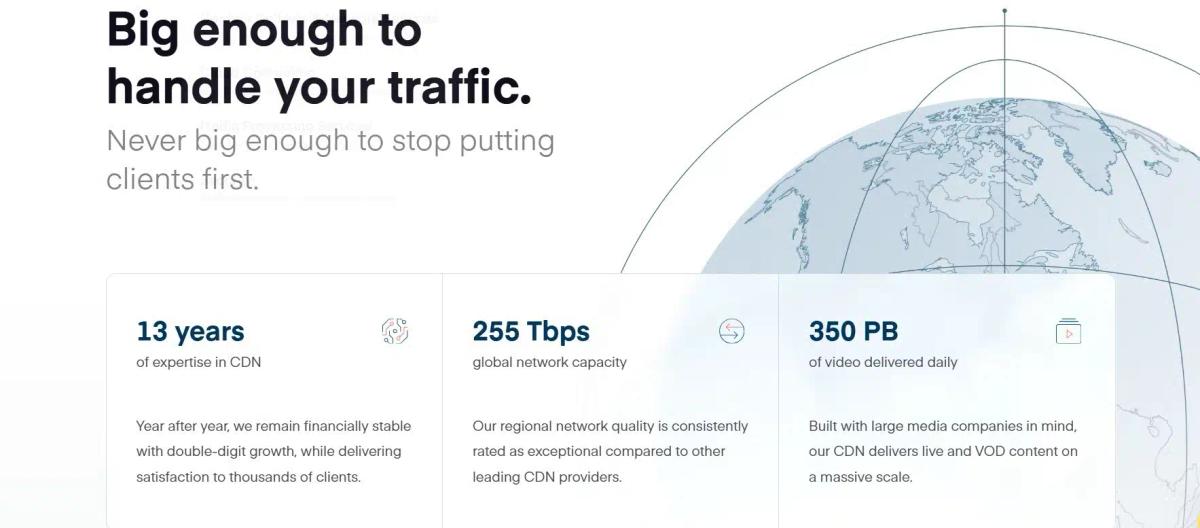
- Over 150 PoPs, >230 Tbps capacity, and streaming-specific features like live and VOD optimization.
- Includes WAF, token authentication, and origin shielding.
Ideal for:
OTT platforms, media companies, and live event distribution.
Pricing:
Pay‑as‑you‑go pricing starting around $0.02 – $0.04 per GB. Growth plan: $990/mo includes up to 250 TB; overage $3.96/TB; global coverage included.
Limitations:
An interface featuring rich options may intimidate smaller users.
KeyCDN
Core strengths:
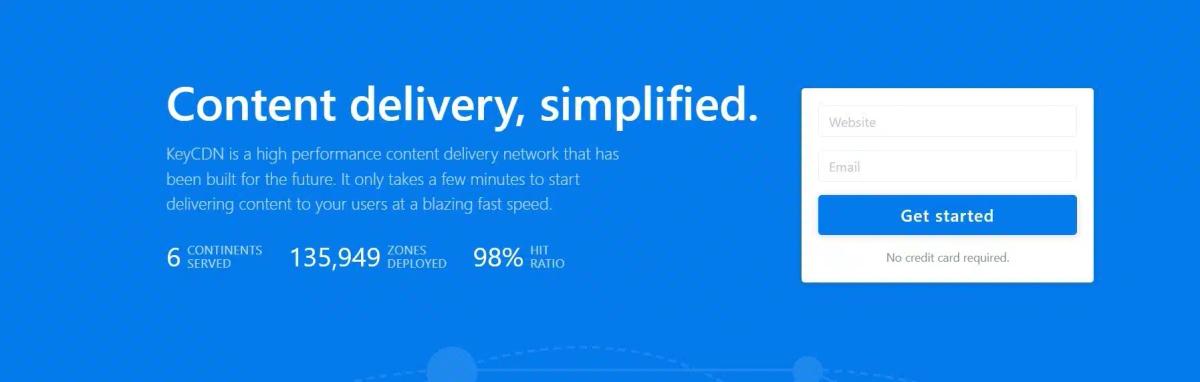
60+ PoPs, HTTP/3, Brotli support, real-time dashboard and API, plus a WordPress plugin.
Ideal for:
Small websites, lightweight SaaS tools, and WordPress blogs on limited budgets.
Pricing:
Starts at $0.04/GB with a $4 minimum deposit. Free 14-day trial.
Limitations:
No edge logic or security rules engine. Limited coverage in remote regions.
How CDNs Work and Why They’re Critical for Today’s Web
A Content Delivery Network (CDN) speeds up websites and apps by storing copies of your content in data centers across the globe. Instead of fetching everything from your main server, a CDN delivers it from the nearest location to the user, cutting down on delays or latency.
Think of it like this: If your website is a warehouse, a CDN is a network of local delivery hubs. Instead of shipping every order from one big facility, you keep copies closer to your customers. The result? Faster delivery, fewer delays, and a smoother experience.
Modern CDNs do much more than caching. They route traffic intelligently, often using Anycast to direct users to the closest or healthiest server. They block DDoSattacks, enforce firewall rules (WAFs), and even run code at the edge, closer to the user , perfect for APIs, personalization, or AI-powered features.
With the rise of video streaming, real-time apps, AI workloads, and eCommerce, CDNs are no longer optional. They’re the backbone of a responsive, secure web.
Build Reliable Origins Today
Low-latency bare metal servers powering CDNs in 20+ regions.
How to Choose the Right CDN Provider for Your Use Case
Choosing the best CDN provider isn’t about brand names. It’s about picking the right fit for your speed, security, and scaling needs. Here’s what matters most in 2026.
Global Reach (PoPs)
The more Points of Presence (PoPs) a CDN has, the closer your content gets to your users.
- Running a global eCommerce site? Choose Cloudflare or Akamai. They offer 250+ PoPs and built-in security.
- Building for a local audience? Bunny.net or KeyCDN gives you solid performance at a lower price.
Cache Control: Real-Time Purging vs. TTL
If your content updates often, choose a CDN that supports real-time cache purging. TTL-only setups won’t cut it.
- Fastly gives devs full control with instant purging.
- Cloudflare and Google Cloud CDN work well for mostly static content.
Developer Features and APIs
Need custom routing, edge logic, or fine-grained control? Not all CDNs offer it.
- Cloud-native teams: Use Fastly or CloudFront. Both offer powerful APIs and edge scripting.
- WordPress or low-code users: Go with Bunny or Cloudflare. Simple plugins and fast setup.
Security Layers (DDoS, WAF, TLS)
A CDN without security isn’t a real CDN.
- Look for built-in WAF, TLS 1.3, and DDoS mitigation.
- Cloudflare leads the pack in free and enterprise-grade protection.
- Akamai and Fastly also offer strong layered defenses for larger teams.
Budget and Bandwidth
Don’t overpay, but don’t underserve your users either.
- Startups: Bunny.net or KeyCDN offer rates as low as $0.01–$0.04/GB.
- **Heavy traffic sites:**Google CDN and Amazon CloudFront offer usage-based pricing and scale well.
- Free options: Cloudflare offers a free plan with generous limits.
Platform Compatibility
Your CDN should work with your tools, not fight them.
| Use Case | Best Match |
|---|---|
| WordPress | Cloudflare CDN, Bunny.net |
| AWS Hosting | Amazon CloudFront |
| GCP Services | Google Cloud CDN |
| Headless CMS / Jamstack | Fastly CDN |
| Video or Live Streams | Akamai CDN, CDN77 |
The right CDN makes your site faster, safer, and easier to scale. But only if you pick based on your real needs, not marketing fluff.
Best Free CDN Providers for Startups and Small Sites
Free CDN providers are a good starting point for startups and small websites. They improve speed, reduce latency, and save bandwidth without upfront cost.
- Cloudflare offers unlimited bandwidth, free SSL, and easy setup with ongoing free use.
- Amazon CloudFront provides 1TB free for 12 months, but the trial ends.
- Google Cloud CDN gives $300 credits for 90 days, making it best for testing.
- Bunny.net offers a 14-day trial and then low-cost pricing.
These free options suit blogs, MVPs, and low-traffic apps. However, as traffic grows or advanced control is needed, upgrading to a paid CDN becomes the better choice.
Best CDN Options for WordPress Sites in 2026
When choosing a CDN for WordPress, speed is not the only factor. Ease of use matters just as much. A good CDN should integrate with plugins, support full-page caching for carts and sessions, and optimize images with WebP conversion.
Cloudflare offers one-click setup, free SSL, and smart caching. Bunny.net is affordable and strong for image-heavy sites.
KeyCDN is budget-friendly for simple blogs. CloudFront suits AWS developers, while Google Cloud CDN works well for GCP users.
For most WordPress sites, Cloudflare is the easiest choice. Bunny.net is ideal for media-rich blogs, while developers may prefer CloudFront or Google CDN.
RedSwitches: The Infrastructure Behind Your CDN
Behind every fast, reliable CDN is a strong origin. RedSwitches provides the infrastructure many teams rely on to serve content closer, faster, and without compromise.
- With 20+ global data centers, your origin server stays close to major user hubs, reducing latency and easing CDN edge fetches.
- Our1–100 Gbps unmetered bandwidth ensures that even during high-traffic bursts, your origin remains responsive and resilient.
- Bare metalinfrastructure offers consistent performance with no virtualization overhead, critical for CDNs that rely on fast, cacheable responses.
- We offer dedicated plans tailored for AI and GPU workloads, ensuring the power and scalability needed for demanding applications like media streaming and personalization.
- Ensure maximum uptime and fault tolerance for mission-critical applications with our HA servers.
- Secure and scale decentralized applications with our Web3-optimized servers.
- Crypto payments make it easy to launch projects quickly, especially for developers in fast-moving environments.
Whether you’re running your own edge nodes or need a reliable origin to plug into providers like Cloudflare, Fastly, or Bunny.net, we give you the flexibility to build your stack, your way.
Recommendations Based on Your Needs
Startups and small sites can begin with free CDN providers like Cloudflare or Bunny.net. They offer fast setup, essential features, and no upfront costs. For large-scale or performance-critical apps, Fastly, Akamai, or CloudFront deliver better control, security, and edge logic.
WordPress users should prioritize CDNs with plugin support and full-page caching.
But remember, your CDN is only as fast and reliable as the infrastructure it’s built on.
Always test with real-world traffic. Use free trials, monitor cache hit rates, and measure latency across regions. What works best on paper isn’t always the fastest in practice.
Choose based on performance, not promises.
FAQs
Q. How does the global PoP distribution influence CDN effectiveness?
A wider PoP (Point of Presence) network means content gets cached closer to your users. This reduces load times and packet loss. The more global your PoPs, the better your site performs across different regions, especially for media-heavy or interactive content.
Q. Which CDN provider is the best for enterprise-level security?
Cloudflare CDN leads here. It offers built-in DDoS protection, a robust Web Application Firewall (WAF), bot mitigation, and Zero Trust tools. Akamai CDN is also strong in regulated industries thanks to its long-standing enterprise security portfolio.
Q. What factors should I consider when choosing a CDN provider?
These factors should be considered when choosing a CDN Provider.
- Global reach (number and location of PoPs)
- Real-time purging and cache control
- Developer tools and API support
- Security features (DDoS, WAF, TLS support)
- Integration ease (with AWS, WordPress, etc.)
- Pricing model (pay-as-you-go vs flat rate)
Q. What are the main advantages of RedSwitches’ bare metal servers for CDN use?
RedSwitches offers raw, dedicated compute power, no virtualization overhead. This is ideal for CDN origin servers that need stable I/O and low response times. Our unmetered bandwidth also prevents bottlenecks during traffic spikes.
Q. How does RedSwitches ensure low latency and high performance for CDN clients?
We operate out of 20+ global data centers, strategically located to reduce physical distance between your origin and CDN edge nodes. Paired with high-throughput networking and instant provisioning, this helps CDNs fetch content quickly, even under load.
Hafsa Qadeer
Technical Writer
Hafsa Qadeer is a Technical Content Writer at RedSwitches and a journalist with a background in molecular biology and oncology. She brings research precision to technical writing and SEO strategy, turning complex topics in infrastructure, biotech, and AI into content that informs and engages.

Wreckfest 2 Dedicated Server Setup Guide 2026
Build a reliable Wreckfest 2 dedicated server with clear, practical steps for 2026 covering installation, configuration, ports, optimization, and troubleshooting.

Last Oasis Dedicated Server Setup Guide 2026
Learn how to configure, launch, secure, troubleshoot, and scale a reliable Last Oasis dedicated server using SteamCMD, MyRealm, and networking.

Barotrauma Dedicated Server Setup Guide 2026
Configure a stable Barotrauma dedicated server on Windows or Linux with SteamCMD, UDP ports, mods, permissions, backups, and troubleshooting steps.
Power Your Next Project With Bare Metal
10 min delivery, zero setup fees, and 24/7/365 human engineers across 20+ global locations.